FR3 - Multiplayer Games
- 4.4
- Rating
- 10.00M
- Installs
- Free
- Price

 Analysis by App-foxy
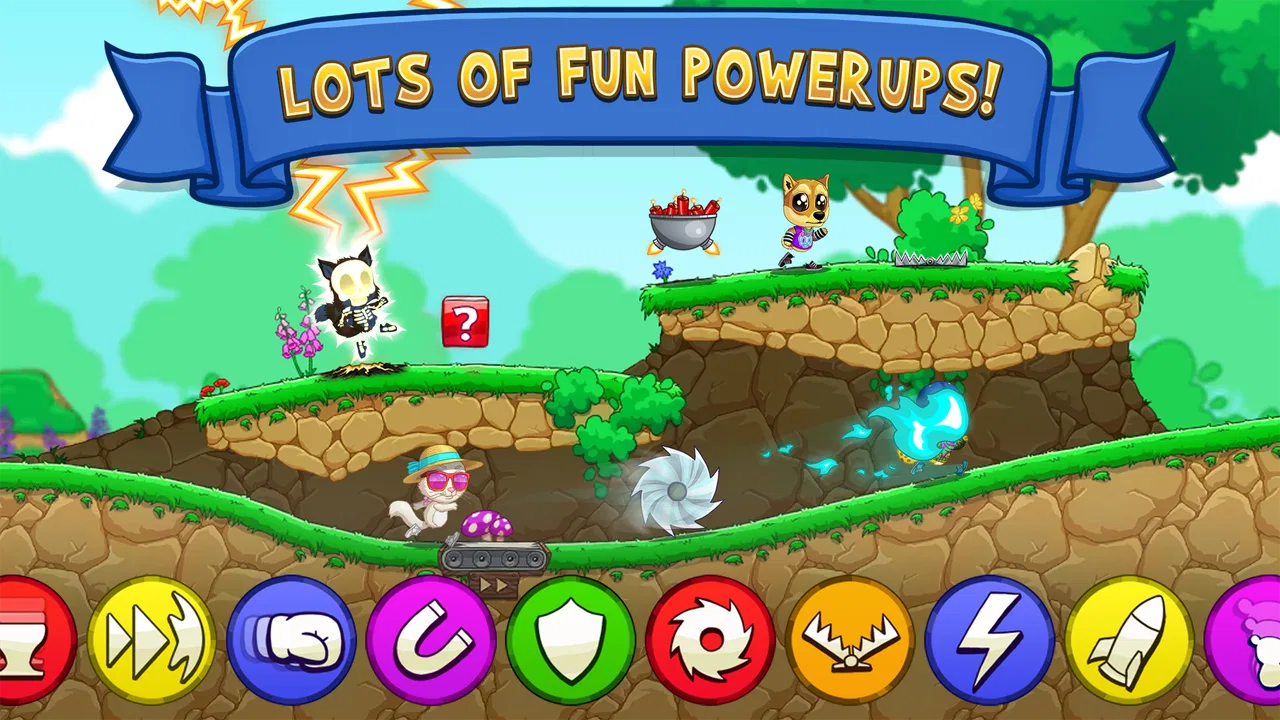
FR3 - Multiplayer Games is a racing game from Dirtybit that I found easiest to understand as a quick social challenge rather than a traditional long-form driving simulator. Its central appeal is immediate: start a race, try to beat friends, and make the result feel personal. That makes it a natural fit for short breaks, casual competition, and players who enjoy the energy of racing without committing to a lengthy single-player campaign.
I also think its accessibility is best judged through context. A game can be simple to enter and still become demanding when the action gets fast, the screen becomes busy, or a player needs more time to react. In my experience, this title works well for some shared-play situations, but it is not automatically comfortable for every ability or playing environment. That distinction matters more than its cheerful presentation.
How FR3 feels to use in everyday play
I find the everyday appeal of FR3 comes from keeping the focus on a quick race rather than a long, demanding session. In this section, I look at how that pace affects attention, comfort, and the way I’d fit a round into a shared break. The key is choosing a moment when I can focus on the screen, which leads naturally to the question of how its racing format plays out in practice.
You May Also Like

 Blood Strike: 2.5 Anniversary
Blood Strike’s Loadouts Turn Every Drop Into a Tactical Gamble
A close look at Blood Strike’s custom loadouts: how fast access to signature weapons reshapes its battle royale rhythm, rewards preparation, and narrows the gap between fights.

 Pandora - Music & Podcasts
Pandora’s Music Is Easy to Start, but Harder to Recover
Pandora’s strength is its low-effort path from a seed to a station. Its weak spot is how much confidence it asks you to place in connection, setup, and quiet recovery.

 8 Ball Pool
 Is Built on Rivalries, Rematches, and Routine
A close look at the rivalries, rematches, shared routines, and unanswered safety questions that turn a quick pool match into a persistent mobile community.

 Samsung Music
’s Quiet Strength Is Playing What You Already Own
Its reach comes less from spectacle than from dependable access to a personal library. That simplicity is both the app’s strongest retention engine and its ceiling.

 AccuWeather: Weather Radar
AccuWeather Review: A Quick, Clear Forecast for Everyday Decisions
For everyday plans, the best forecast is the one you can understand quickly. AccuWeather makes rain timing, radar, and local conditions easy to act on, with a few trade-offs.

 Hill Climb Racing
Why Hill Climb Racing Still Turns Crashes Into One More Run
A tiny car, a bumpy hill and one more upgrade: Hill Climb Racing keeps resurfacing because its simple chaos makes every near-miss feel personal.
More From Our News Desk



Readable enough for quick decisions
The game’s racing focus gives it a clear purpose from the moment I open it: I am there to compete, not manage a complicated simulation. That clarity helps when I want to play for a few minutes. I do not need to learn a large collection of menus before understanding the basic goal, and the multiplayer framing makes the social reason to keep playing obvious.
That said, readability in a racing game is not only about text. It is also about recognizing what is happening while moving quickly. A player has to distinguish the route, other racers, hazards, and the next useful action without losing attention. I found that this kind of visual processing can be more important than reading a menu. Someone who is comfortable with quick visual changes will likely settle in faster than someone who needs a slower, calmer presentation.
The game’s short description is simply “FR3,” while its broader store summary presents it as a way to win against friends in style. I would not use either phrase as a complete explanation of the experience. The more useful description is that it is a compact, competitive racing game whose value grows when the people around you are willing to join the rivalry.
Navigation is most approachable when I treat each session as a small loop: enter the game, find the race or challenge, play, then decide whether the result deserves another attempt. That rhythm is more inviting than an app that asks me to understand several systems before I can do anything. For younger players or people who are less confident with games, a friend who already knows the flow can make the first session much less frustrating.
What the racing format demands from the player
Racing games create a particular accessibility trade-off. They are often easier to understand than strategy games because the objective is visible, but they can be harder to control because the useful response window may be brief. FR3 - Multiplayer Games sits in that tension. I can explain the objective to a new player quickly, yet explaining what to do does not guarantee that the player will have enough time to react during a close race.
This is where the game suits different people in different ways. A player who enjoys repeated attempts may see a mistake as part of the fun. Someone with slower reaction speed, hand fatigue, tremors, or difficulty tracking rapid motion may experience the same moment as a barrier rather than a challenge. I would introduce it gently, without assuming that everyone wants to compete at the same pace.
One practical approach is to play in short rounds instead of treating a session as a test of endurance. That makes it easier to stop after a frustrating race, rest the hands, adjust the phone position, or let another person take a turn. It also keeps the social side friendly: the point becomes sharing a few races rather than proving who can continue the longest.
Motor demands and control comfort
For motor accessibility, the important question is whether the player can make timely, repeated inputs while also watching the race. Even a control scheme that feels obvious to one person can become tiring when the phone is held one-handed, when the player has limited reach, or when precise movement is difficult. I would test the game with the device resting on a stable surface rather than assuming handheld play is comfortable for everyone.
A stable setup can make a surprisingly large difference. Resting the phone reduces the need to grip it tightly, while placing it at a comfortable viewing angle can help a player keep both hands available. This is not a special feature of the game, but it is a realistic way to reduce physical strain during a racing session. I would also avoid playing while walking or standing in a crowded place, because divided attention makes fast racing harder and increases the chance of dropping the device.
Another useful habit is to decide in advance how long a session should last. Competitive games encourage “one more race,” particularly after a loss, but repeated attempts can turn a manageable control task into hand fatigue. Short breaks are not only sensible for comfort; they can improve concentration and prevent frustration from being mistaken for a lack of ability.
Players who rely on alternative input methods should approach the game with realistic expectations. A racing title built around quick interaction may be less suitable if a user cannot access the required controls at speed. I would not choose FR3 as the first option for someone who specifically needs extensive remapping, switch access, or a slower interaction model unless they have already confirmed that their personal setup works well.
Sensory load and the playing environment
The visual intensity of racing can affect players differently. Fast movement, changing positions, and the pressure of a close result may be exciting for one person and tiring for another. If motion is uncomfortable, I would begin with a brief session in a well-lit room and stop as soon as symptoms appear. A larger screen may also make the action easier to follow than a small phone display, although the experience still depends on the player’s own comfort.
Sound is another situational factor. Multiplayer racing is often more enjoyable when the player can hear what is happening, but a noisy room can make concentration difficult. I prefer a quiet setting when learning the game, because it lets me focus on the visual flow without competing conversations or background audio. If sound is not useful for a particular player, the game should be approached primarily through its visible information, with the understanding that this may increase the attention required.
For a player who is sensitive to bright screens or rapid movement, a simple routine helps: lower the device brightness to a comfortable level, avoid playing in a dark room, and take frequent pauses. These are general viewing practices rather than guaranteed solutions, but they make a short test session more informative. The key is not to force endurance. If the game remains uncomfortable after sensible adjustments, another racing style may be a better choice.
Using it in real social situations
The strongest everyday use case is a quick challenge between friends. Imagine waiting for a meal, sitting with family after dinner, or taking a short break with a colleague who also enjoys games. FR3 can fit that moment because the appeal is easy to explain: race, compare the result, and decide whether to try again. It does not require the same kind of quiet commitment as a large racing simulation.
However, social play can create pressure. A player who needs more time to learn may feel exposed if experienced friends immediately turn every race into a serious contest. I would set expectations before starting: let the newest player explore, agree that losing is fine, and avoid treating the first few rounds as a ranking exercise. That small change can determine whether the game feels welcoming or embarrassing.
It is also worth considering connection and attention in shared spaces. Multiplayer play is less convenient when the player has to monitor children, listen for an announcement, or move between tasks. A race that lasts only a short time can still be difficult to pause mentally if something urgent happens. I would choose it for a break where I can give the screen my full attention, not for a situation where I am responsible for something else at the same time.
For families, the age label of Everyone 10+ provides a useful boundary when deciding whether it fits a child. I would still sit with a younger or inexperienced player during the first session, because age guidance does not explain the emotional side of competition. Some children enjoy repeated losses as practice; others become upset quickly when a friend wins. The best experience depends as much on the group’s attitude as on the game itself.
Where it stands beside other racing choices
Compared with a realistic racing simulator, FR3 is the more approachable choice when I want quick competition instead of detailed vehicle management. A simulator is usually better for someone who enjoys careful tuning, long races, and the feeling of mastering a driving model. FR3 makes more sense for a player who values the social rematch and the immediate result.
Compared with a solitary arcade racer, its multiplayer identity is more important. A solo game may be preferable when I want to practice privately, play without coordination, or relax without worrying about another person’s score. FR3 is at its best when the competitive relationship is part of the entertainment. If nobody in my circle wants to race, its main reason to return becomes weaker.
There is also a difference between this kind of game and turn-based or slower competitive apps. A turn-based alternative gives players more time to read, plan, and respond, which can be more inclusive for people who find rapid action difficult. FR3 offers more immediacy, but that immediacy is exactly what may exclude some players. I would choose based on whether the person wants speed or control over the pace.
Progress, spending, and practical expectations
The game is free to install, which makes trying it with friends straightforward. It includes optional in-app purchases ranging from $0.99 to $99.99 per item, so I would treat spending as something to discuss before handing the phone to a child or sharing the game with a family member. The free entry point is useful, but optional purchases can change how comfortable the experience feels for people who prefer a completely fixed-cost game.
I would not begin by spending money. First, I would check whether the controls feel manageable, whether the multiplayer format actually suits my group, and whether the visual pace is comfortable. If the core races do not feel enjoyable, purchases will not solve the underlying mismatch. This is especially important for accessibility: a paid item cannot compensate for controls that a player cannot use comfortably.
The game has reached over ten million installs and holds a 4.4 average from around two hundred eighty-nine thousand ratings, with roughly forty-three thousand written reviews. Those figures suggest a substantial audience, but they should not replace a personal trial. Popularity can tell me that the concept has broad appeal; it cannot tell me whether the pace, controls, and social pressure fit my own needs.
Dirtybit has continued the game through version 4.58.0, and the title was released on November 30, 2016. It works on Android 7.0 and later, which covers a wide range of older devices. Still, compatibility is not the same as comfort. A phone that can run the game may have a small display, limited battery life, or performance that makes fast action less pleasant. I would judge the experience on the actual device I plan to use, not just on the operating-system requirement.
Remaining barriers I would take seriously
The biggest barrier is the combination of speed and competition. Players with visual processing differences, motor limitations, attention difficulties, or sensitivity to motion may need more flexibility than a fast multiplayer race naturally provides. I would avoid promising that every player can adapt through practice. Practice helps some people, but it does not remove every physical or sensory constraint.
A second barrier is social comparison. The game’s appeal depends on winning against friends, yet that same focus can make a less experienced player feel constantly behind. A supportive group can turn the race into shared entertainment, while an overly competitive group can make it inaccessible emotionally. If the intended player dislikes losing in public, a private single-player or slower racing alternative may be a kinder choice.
A third barrier is the phone itself. Small screens, glare, cramped hand positions, and interruptions can all make a quick race harder. I would not recommend playing during a commute where the player must watch surroundings, nor while multitasking. The game may be designed for short sessions, but short does not mean risk-free when attention is split.
There is also a financial consideration. Because optional purchases can reach a high individual price, families should use the device’s purchase controls and agree on boundaries before play. I see this as part of inclusive access: a game is less comfortable when a child or dependent player can accidentally create financial stress for the household.
My inclusive verdict
I recommend FR3 - Multiplayer Games to people who want a lively, social racing experience that can fit into brief sessions. It is particularly appealing for friends who enjoy rematches, playful rivalry, and learning through repeated attempts. Its free starting point, broad Android compatibility, and clear racing purpose make it easy to test without a large commitment.
I would recommend a more cautious trial for players with limited dexterity, motion sensitivity, visual tracking difficulties, or a strong need for slower, fully adaptable controls. The right setup may help: a supported phone, a comfortable viewing angle, a quiet room, short sessions, and a patient group of friends. Those adjustments can improve the experience, but they cannot guarantee that the game will suit every player.
My final view is that the game is inclusive mainly through its approachable social idea, not because racing automatically removes access barriers. It welcomes people who can comfortably follow fast action and make timely inputs, while leaving some players better served by slower or more customizable alternatives. The best way to decide is to treat the first race as an accessibility test, not a performance test. If the controls, pace, and social atmosphere feel comfortable, FR3 can become a genuinely fun shared activity. If they do not, choosing a different racing format is not giving up; it is choosing a game that respects how you play.
FAQs for FR3 - Multiplayer Games
01What types of games are available on FR3 - Multiplayer Games?
FR3 - Multiplayer Games offers a diverse selection of games, including action, strategy, and puzzle genres. Users can enjoy real-time multiplayer experiences and compete with friends or players worldwide. The app frequently updates its game library, ensuring fresh content and new challenges for all types of gamers.
02Is FR3 - Multiplayer Games free to play?
FR3 - Multiplayer Games is free to download and play, with a range of games accessible at no cost. However, some games may offer in-app purchases for additional features, power-ups, or customizations. These purchases are optional, allowing players to enjoy the core gameplay experience without spending money.
03How can I connect and play with friends on FR3 - Multiplayer Games?
To play with friends on FR3 - Multiplayer Games, you can create a profile and link your account to social media platforms. This allows you to invite friends to join your games directly. Additionally, the app features a search function to easily find and connect with friends who are already using the platform.
04What are the system requirements for FR3 - Multiplayer Games?
FR3 - Multiplayer Games is designed to run smoothly on both Android and iOS devices. Typically, it requires devices with at least Android 5.0 or iOS 10.0. Ensure your device has sufficient storage space and a stable internet connection to facilitate seamless multiplayer gaming experiences.
05How does FR3 - Multiplayer Games ensure player safety and fair play?
FR3 - Multiplayer Games prioritizes player safety with robust security measures, including account verification and reporting tools. Fair play is maintained through anti-cheat software and regular monitoring to prevent exploits. The app also features a community guideline policy to ensure respectful interactions between players.
Pros
- Smooth multiplayer experience.
- Wide variety of games available.
- User-friendly interface.
- Regular updates and new content.
- Cross-platform compatibility.
Cons
- Requires constant internet connection.
- In-app purchases can be costly.
- Occasional server lag issues.
- Limited customization options.
- Ads can be intrusive.

FR3 - Multiplayer Games
Gallery